By the time the Midnight Queue squad hit Diamond in Marvel Rivals, they had mastered the art of getting rolled. One night they ran three Duelists and a dream; the next they panic-swapped after every lost fight. Their comms were pure tilt queue. Then they saw the number that hit harder than a Thor hammer: as of the October 22, 2026 Season 10.5 (20261022) patch, uncoordinated comps sat 41% lower in win rate than optimized 2-2-2 builds in Diamond+ community analysis. No cap, that stung.
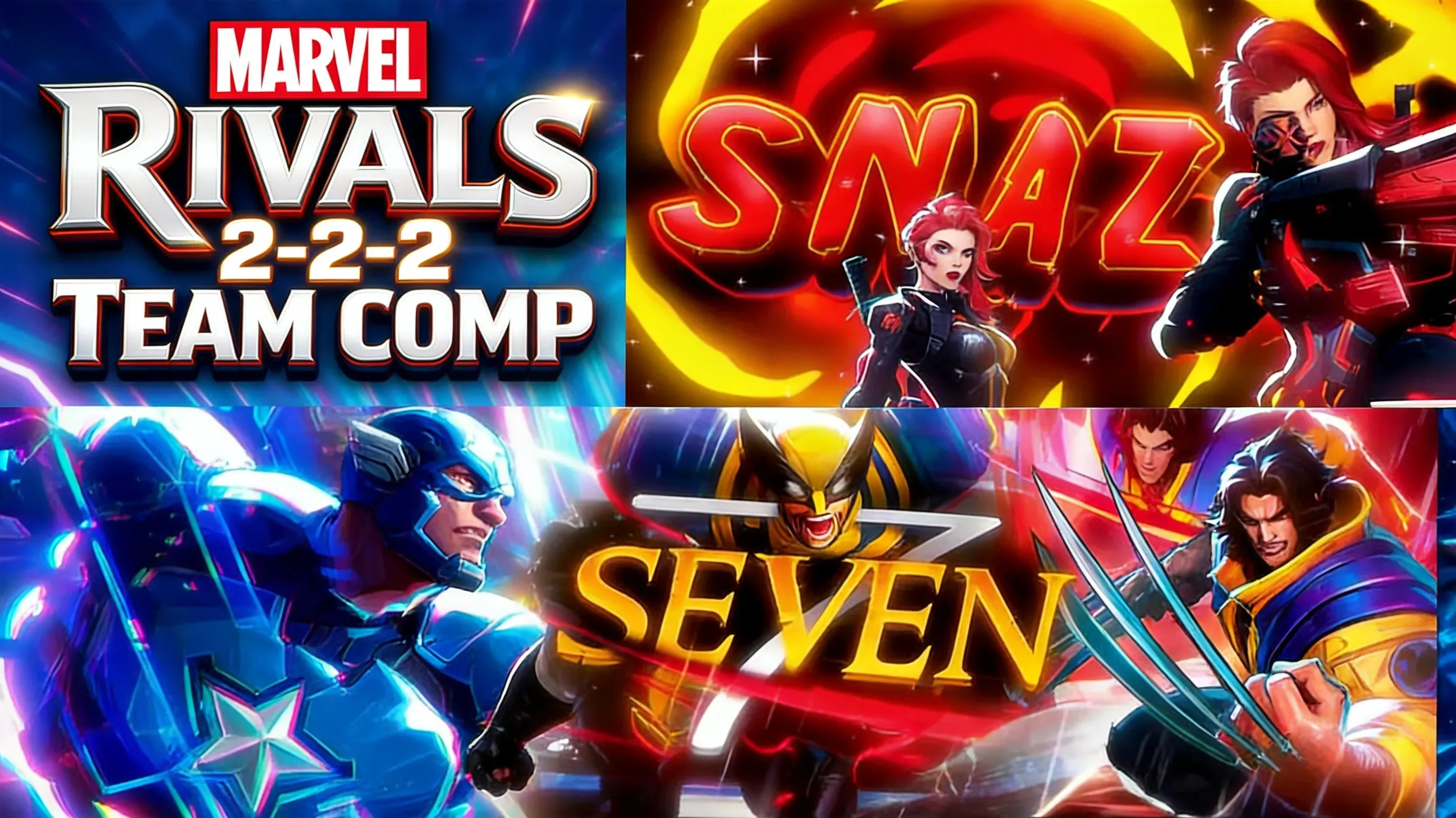
So the squad stopped chasing isolated tier-list picks and started treating team composition like a game plan. The baseline was simple: two Vanguards, two Duelists, and two Strategists. In current competitive data, that shell produced roughly a 54.07% win rate. The Midnight Queue did not need to reinvent the wheel. They needed to pick one plan, brawl, dive, or poke, before locking heroes, then make Team-Up loadouts support that plan instead of vibing on spawn.
The Baseline That Stops the Bleeding
The first rule the squad learned was to lock the role baseline first. Two Vanguards create space, two Duelists secure eliminations, and two Strategists sustain the fight. Deviate only when the team can actually execute a coordinated specialist setup. If three Duelists get selected, someone has to answer what replaces the missing Vanguard and Strategist. If there is no answer, it is time to read the room and return to 2-2-2.
The second rule was to name the win condition. Brawl is for objective control. Dive is for vertical maps and fragile backlines. Poke is for sightline-heavy defenses. The Midnight Queue used to lose because five players had five different win conditions. Now they call one out before the spawn doors open.
Four Builds, Four Win Conditions
The squad tested four builds and found that each one solved a different problem. Diamond+ results favored clear synergy, while the specialist option demanded much tighter ultimate cycling and target focus.
Build
Core Heroes
Team-Up or Key Note
Best Use
Win Condition

Rocket Cage
Peni Parker and Magneto; Storm and Phoenix; Rocket Raccoon and Mantis
Rocket Network
King of the Hill and objective-heavy maps
Hold the point, layer sustain, grind out grouped enemies with area damage

Thunderous Dive
Thor and Venom; Magik and Black Panther, or Hela for extra reach; Luna Snow and Adam Warlock
Cosmic Cyclone
Vertical maps or fragile Strategist backlines
Call one target before jumping and collapse together

Storm Front
Peni Parker and Emma Frost; Storm and Hela, or The Punisher; Loki and Gambit with his Strategist loadout
Long-range poke
Open maps with long sightlines or narrow defensive chokepoints
Chip opponents before they reach cover, then peel with crowd control

Triple Strategist Sustain
Magneto; The Punisher and Moon Knight; Luna Snow, Cloak & Dagger, and Invisible Woman
Specialist survival
Coordinated stacks that can cycle defensive ultimates
Rotate barriers and healing instead of spending both at once
Rocket Cage was the squad's comfort pick. They held the objective, layered Peni Parker's frontline utility with Rocket Raccoon and Mantis sustain, and let Storm and Phoenix pressure grouped enemies with area damage. The win condition was a slow grind. The moment someone abandoned the point for a low-value flank chase, the cage cracked.
Thunderous Dive was the opposite. Thor and Venom started the collapse, Magik and Black Panther finished the elimination, and Adam Warlock's soul-link helped the squad survive the counterattack. The rule was simple: call one target before jumping. Split dives usually wasted the mobility advantage and left the squad cooked.
Storm Front became their defensive answer. They chipped opponents before they reached cover, then used Emma Frost and Peni Parker's crowd control to peel when a rush began. The squad learned not to force this build into cramped brawl spaces where enemy Vanguards could close distance safely.
Triple Strategist Sustain was the high-skill exception. Magneto held the front while The Punisher and Moon Knight applied pressure, and Luna Snow, Cloak & Dagger, and Invisible Woman rotated defensive ultimates. The squad only used it when everyone could cycle cooldowns cleanly. It sacrificed a second Vanguard, so it was not a default solo-queue solution. One missed barrier and the whole plan face-planted.
Core Team Building Rules for Consistent Wins
The Midnight Queue turned their comeback into a short list of rules:

Lock the role baseline first. Start at 2-2-2, then deviate only when the team can execute a specialist setup.

Name the win condition. Choose brawl, dive, or poke before the first fight, not after the first loss.
Counter dive with a deliberate pivot. Against Venom and Magik, use The Thing for grounding and crowd control, Bucky Barnes for hook pressure and bonus health, and Loki for illusions and immortality resets. Make the swap when the enemy repeatedly reaches your backline, not after the match is already lost.

Set Team-Ups in spawn. Season 9's overhaul gives every hero two selectable Team-Up abilities, and the partner is no longer mandatory. If the comp lacks mobility, choose Mantis and Star-Lord's Star Blossom even without the partner. A matching hero enhances the effect, but the loadout still fills the immediate gap.
That last point mattered more than the squad expected. They used to treat Team-Ups as bonus flavor. Now they treat them as part of the loadout puzzle. A reliable 2-2-2 shell can shift quickly when Team-Up effects enter the equation.
Seasonal Updates and the Final Check
Season 10.5, version 20261022, runs alongside All Hallows' Glow from October 15 to November 13, 2026. Completing its missions awards Rocket Raccoon's Trash King costume for free, while Path to Doomsday - Avengers: Endgame begins October 24 with Captain America's Winter Soldier costume listed as a reward. The current roster has 56 heroes, which means the meta can wiggle fast after every balance change.
The Midnight Queue's final habit was the most important: check official patch notes after every balance change, compare Diamond+ pick and win-rate trends, and review replays before copying a new comp. They stopped asking whether they lost because of composition, execution, or target priority. They started answering it. That was the night they stopped getting rolled and started rolling with a plan.
Keeping up with every seasonal release, exclusive skin drop, and battle pass reward can get demanding, especially when you want your squad looking sharp while dominating ranked lobbies. For players looking to stock up on in-game currency safely and affordably, checking out
LootBar marvel rivals recharge services offers a seamless way to secure your resources ahead of the next event. Having your loadout and passes ready ensures you can spend less time managing accounts and focus entirely on refining team synergies and climbing the competitive ladder.
Beyond tracking your cosmetic progression, staying aligned with developer updates directly impacts how you approach each competitive split. Regularly monitoring the
Marvel Rivals official site provides firsthand details on balance adjustments, hero hotfixes, and upcoming event schedules so your squad is never caught off guard by sudden meta shifts. Pairing accurate game knowledge with solid mechanical execution ensures that every team composition you build remains effective as the roster continues to evolve.
By the time the Midnight Queue squad hit Diamond in Marvel Rivals, they had mastered the art of getting rolled. One night they ran three Duelists and a dream; the next they panic-swapped after every lost fight. Their comms were pure tilt queue. Then they saw the number that hit harder than a Thor hammer: as of the October 22, 2026 Season 10.5 (20261022) patch, uncoordinated comps sat 41% lower in win rate than optimized 2-2-2 builds in Diamond+ community analysis. No cap, that stung.
[img]https://seogc.fp.ps.netease.com/file/6ada702385c793fb82c80189gEdGC2UJ07[/img]
So the squad stopped chasing isolated tier-list picks and started treating team composition like a game plan. The baseline was simple: two Vanguards, two Duelists, and two Strategists. In current competitive data, that shell produced roughly a 54.07% win rate. The Midnight Queue did not need to reinvent the wheel. They needed to pick one plan, brawl, dive, or poke, before locking heroes, then make Team-Up loadouts support that plan instead of vibing on spawn.
The Baseline That Stops the Bleeding
The first rule the squad learned was to lock the role baseline first. Two Vanguards create space, two Duelists secure eliminations, and two Strategists sustain the fight. Deviate only when the team can actually execute a coordinated specialist setup. If three Duelists get selected, someone has to answer what replaces the missing Vanguard and Strategist. If there is no answer, it is time to read the room and return to 2-2-2.
The second rule was to name the win condition. Brawl is for objective control. Dive is for vertical maps and fragile backlines. Poke is for sightline-heavy defenses. The Midnight Queue used to lose because five players had five different win conditions. Now they call one out before the spawn doors open.
Four Builds, Four Win Conditions
The squad tested four builds and found that each one solved a different problem. Diamond+ results favored clear synergy, while the specialist option demanded much tighter ultimate cycling and target focus.
Build
Core Heroes
Team-Up or Key Note
Best Use
Win Condition
🛡️ Rocket Cage
Peni Parker and Magneto; Storm and Phoenix; Rocket Raccoon and Mantis
Rocket Network
King of the Hill and objective-heavy maps
Hold the point, layer sustain, grind out grouped enemies with area damage
⚡ Thunderous Dive
Thor and Venom; Magik and Black Panther, or Hela for extra reach; Luna Snow and Adam Warlock
Cosmic Cyclone
Vertical maps or fragile Strategist backlines
Call one target before jumping and collapse together
🎯 Storm Front
Peni Parker and Emma Frost; Storm and Hela, or The Punisher; Loki and Gambit with his Strategist loadout
Long-range poke
Open maps with long sightlines or narrow defensive chokepoints
Chip opponents before they reach cover, then peel with crowd control
💠 Triple Strategist Sustain
Magneto; The Punisher and Moon Knight; Luna Snow, Cloak & Dagger, and Invisible Woman
Specialist survival
Coordinated stacks that can cycle defensive ultimates
Rotate barriers and healing instead of spending both at once
Rocket Cage was the squad's comfort pick. They held the objective, layered Peni Parker's frontline utility with Rocket Raccoon and Mantis sustain, and let Storm and Phoenix pressure grouped enemies with area damage. The win condition was a slow grind. The moment someone abandoned the point for a low-value flank chase, the cage cracked.
Thunderous Dive was the opposite. Thor and Venom started the collapse, Magik and Black Panther finished the elimination, and Adam Warlock's soul-link helped the squad survive the counterattack. The rule was simple: call one target before jumping. Split dives usually wasted the mobility advantage and left the squad cooked.
Storm Front became their defensive answer. They chipped opponents before they reached cover, then used Emma Frost and Peni Parker's crowd control to peel when a rush began. The squad learned not to force this build into cramped brawl spaces where enemy Vanguards could close distance safely.
Triple Strategist Sustain was the high-skill exception. Magneto held the front while The Punisher and Moon Knight applied pressure, and Luna Snow, Cloak & Dagger, and Invisible Woman rotated defensive ultimates. The squad only used it when everyone could cycle cooldowns cleanly. It sacrificed a second Vanguard, so it was not a default solo-queue solution. One missed barrier and the whole plan face-planted.
Core Team Building Rules for Consistent Wins
The Midnight Queue turned their comeback into a short list of rules:
🔒 Lock the role baseline first. Start at 2-2-2, then deviate only when the team can execute a specialist setup.
🧠 Name the win condition. Choose brawl, dive, or poke before the first fight, not after the first loss.
🛡️ Counter dive with a deliberate pivot. Against Venom and Magik, use The Thing for grounding and crowd control, Bucky Barnes for hook pressure and bonus health, and Loki for illusions and immortality resets. Make the swap when the enemy repeatedly reaches your backline, not after the match is already lost.
🕹️ Set Team-Ups in spawn. Season 9's overhaul gives every hero two selectable Team-Up abilities, and the partner is no longer mandatory. If the comp lacks mobility, choose Mantis and Star-Lord's Star Blossom even without the partner. A matching hero enhances the effect, but the loadout still fills the immediate gap.
That last point mattered more than the squad expected. They used to treat Team-Ups as bonus flavor. Now they treat them as part of the loadout puzzle. A reliable 2-2-2 shell can shift quickly when Team-Up effects enter the equation.
Seasonal Updates and the Final Check
Season 10.5, version 20261022, runs alongside All Hallows' Glow from October 15 to November 13, 2026. Completing its missions awards Rocket Raccoon's Trash King costume for free, while Path to Doomsday - Avengers: Endgame begins October 24 with Captain America's Winter Soldier costume listed as a reward. The current roster has 56 heroes, which means the meta can wiggle fast after every balance change.
The Midnight Queue's final habit was the most important: check official patch notes after every balance change, compare Diamond+ pick and win-rate trends, and review replays before copying a new comp. They stopped asking whether they lost because of composition, execution, or target priority. They started answering it. That was the night they stopped getting rolled and started rolling with a plan. 🎯
Keeping up with every seasonal release, exclusive skin drop, and battle pass reward can get demanding, especially when you want your squad looking sharp while dominating ranked lobbies. For players looking to stock up on in-game currency safely and affordably, checking out [url=https://www.lootbar.com/top-up/marvel-rivals]LootBar marvel rivals[/url] recharge services offers a seamless way to secure your resources ahead of the next event. Having your loadout and passes ready ensures you can spend less time managing accounts and focus entirely on refining team synergies and climbing the competitive ladder.
Beyond tracking your cosmetic progression, staying aligned with developer updates directly impacts how you approach each competitive split. Regularly monitoring the [url=https://www.marvelrivals.com/]Marvel Rivals official site[/url] provides firsthand details on balance adjustments, hero hotfixes, and upcoming event schedules so your squad is never caught off guard by sudden meta shifts. Pairing accurate game knowledge with solid mechanical execution ensures that every team composition you build remains effective as the roster continues to evolve.